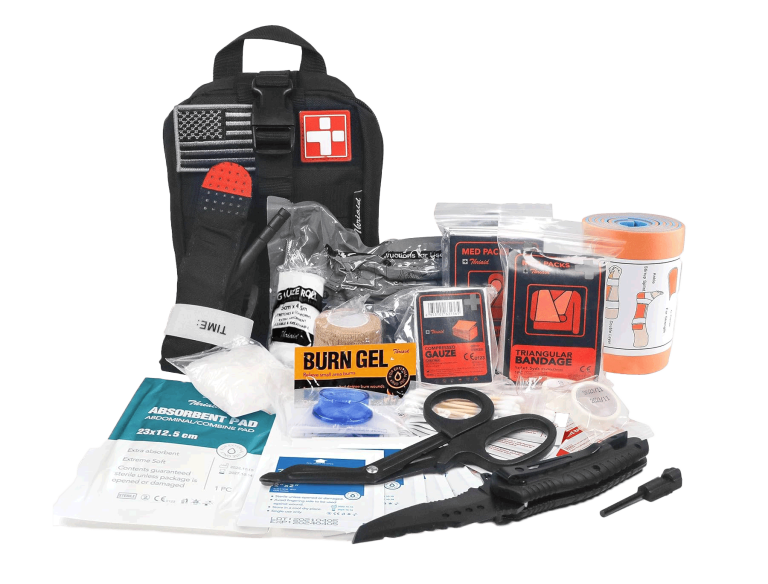
Preparedness has a reputation for being expensive. Social media reinforces the idea that survival requires titanium tools, military-grade gear, and a garage stacked with custom tactical cases. That image sells products, but it doesn’t reflect reality. Preparedness isn’t about money. It’s about mindset. A nuclear kit can be built on a tight budget or with premium equipment, and both can protect a family equally well if the planning is solid.
The budget approach starts with recognizing that most survival tools already exist in the average home. A backpack becomes a go-bag. Trash bags become contamination control. Dish gloves become improvised handlers for dirty clothing. A hooded sweatshirt becomes a first-line barrier against dust. Preparedness is creative before it becomes expensive.
For respiratory protection, budget kits may use N95 masks. They aren’t perfect, but they’re far better than nothing, and most households already have a few left from recent years. For families wanting better protection without spending too much, a half-mask respirator with P100 filters provides industrial-level filtration at a reasonable cost. Both options protect the lungs — the most critical factor when fallout dust may be airborne.
For sheltering, a premium kit might include a HEPA filtration system and pre-cut Mylar insulation. A budget kit uses duct tape and plastic sheeting to seal off a room from incoming dust. In both scenarios, the goal is identical: minimize outside air exchange and give fallout time to decay. The difference isn’t effectiveness; it’s efficiency and convenience.
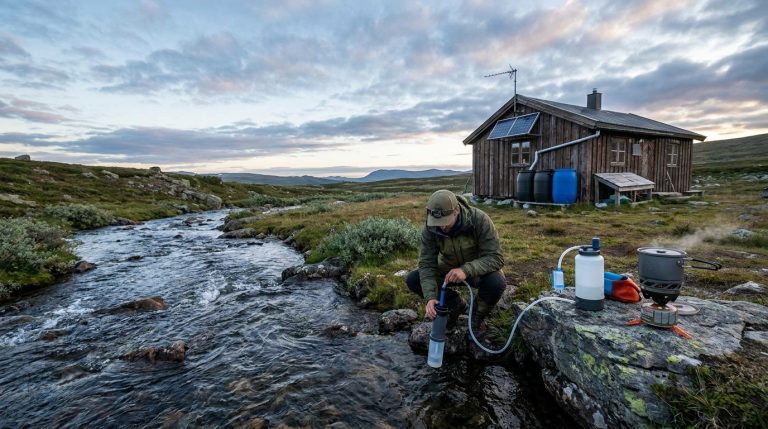
The concept extends to water purification. A high-end nuclear kit might include a portable purifier with a ceramic filter system and chemical treatment tablets. The budget alternative? Bleach and a coffee filter. The bleach kills microorganisms; the filter removes sediment. The result is safe drinking water using tools found in almost every home.
Lighting follows the same principle. A premium kit may include rechargeable lanterns powered by portable solar panels. A budget kit uses LED flashlights and inexpensive battery-operated puck lights. The outcome — the ability to see and function in the dark — doesn’t change based on price.
Communication shows the contrast more clearly. A premium kit includes a hand-crank radio with NOAA alerts and a backup battery bank. The budget version uses a basic AM/FM radio with spare batteries and a reminder to check the weather frequency. One has more features. Both keep you informed when the grid goes silent.
Clothing protection works the same way. High-end nuclear suits exist, and manufacturers are eager to sell them. But in most situations, a disposable rain poncho and gloves accomplish the same thing: keeping fallout off skin and fabric until you reach a safe indoor space.
The truth is sobering: most “premium” nuclear gear does not improve survival as much as having a clear, well-practiced plan. Gear serves the plan. Gear does not replace planning. A $20 respirator worn confidently is more useful than a $400 respirator left in the box because no one practiced using it.
Preparedness pays dividends to discipline, not dollars. When families understand how to shelter, when to evacuate, where to go, and how to reduce contamination, cost becomes a smaller part of the equation. Budget kits still save lives because the person using them understands what comes next.
The real difference between budget and premium is convenience. Premium gear simplifies tasks. Budget gear requires more steps. But both lead to the same goal: time, safety, clarity, control. The world rewards people who take action, not people who wait for perfect circumstances. A nuclear kit is not built to impress anyone. It’s built to protect the people who depend on you.
Preparedness is not a product. It’s a decision.