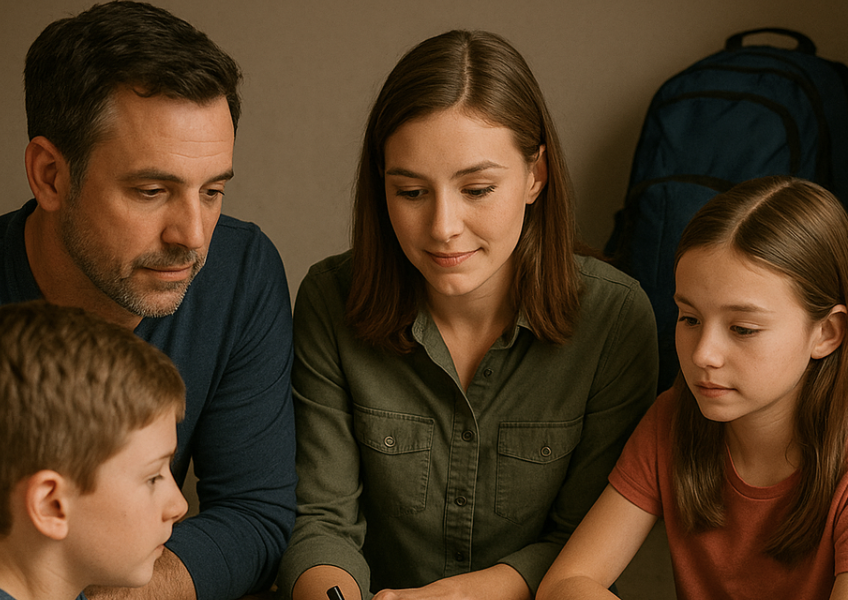
When you start talking about nuclear preparedness, most people picture bunker fantasies or television drama scenarios. But in real life, it’s a lot simpler than that. For me, the turning point was realizing this: a family emergency plan is really just about giving the people you love a clear path when everything around them feels uncertain. Once I understood that, the idea of planning stopped feeling dramatic and became practical.
The first part of building a real plan is communication. But the truth is that in a nuclear event, we probably won’t have much of it. Cell phones might fail. Networks may jam. Power could be out. That means the plan can’t rely on sending texts back and forth or trying to call each other. The family needs a default way to regroup that works even when everything else doesn’t. That starts with choosing a primary meeting point—your home, a neighbor’s basement, or a specific room inside your own house where everyone knows to go immediately.
And because life doesn’t follow rules, every plan needs a backup location as well. If the house is damaged, unreachable, or unsafe because of wind direction and fallout, everyone should already know the second place to meet. This prevents that dangerous period where people panic, start running around the neighborhood, and unknowingly put themselves in more danger. When the plan is clear, movement becomes purposeful instead of frantic.
The next part is assigning roles. Families work better under stress when everyone has a job. It doesn’t have to be complicated. Someone grabs the go-bags. Someone handles the pets. Someone closes the blinds and seals the vents. Someone turns on the emergency radio. When each person has a defined responsibility, they don’t freeze. They move. And movement is what gets you through those first few minutes when nerves are high and time feels compressed.
Of course, you also need a shelter strategy. Not every home has a perfect fallout shelter location, but almost every home has a better location. An interior room. A closet. A bathroom. A basement corner. The goal is to pick the spot with the most walls, floors, or earth between you and the outside. Once the space is chosen, the whole family should walk through the routine for getting it ready—where the water goes, where the food gets stored, where the emergency supplies sit. That way, nothing has to be figured out for the first time under pressure.
Timing matters too. Fallout doesn’t arrive instantly. Depending on distance and wind patterns, it might take 10 minutes or it might take an hour. Every family member should understand that the moment they see a flash—or hear the alert—they need to get inside immediately. No sightseeing. No filming. No guessing. The plan is simple: get indoors, go to the shelter room, and stay put until conditions improve.
Supplies are the final piece of the puzzle. You don’t need to build an underground warehouse. You just need reliable basics: water, food, a radio, medications, first aid items, flashlights, batteries, and anything specific to your family’s needs. Organization matters more than volume. You want to be able to reach everything without hunting for it.
Once all of this is settled, the most important step comes last: write your plan down. Put a printed copy in the go-bags. Tape one inside the shelter room. Give every family member their own page if you need to. During a crisis, the brain doesn’t perform well under pressure. A written plan carries you through the moments when you’re running on instinct.
A family emergency plan isn’t about expecting the worst. It’s about giving yourself and the people you care about a clear, steady direction when the world feels anything but steady. Once the plan is in place, it becomes something you hope you never need—but something you’re grateful to have.