In a quiet corner of Wyoming—far from city lights, cell towers, and anyone who might roll their eyes—54-year-old prepper Eli Turner says he’s uncovered something that could “flip nuclear survival on its head.” And no, it’s not another DIY bunker trick or an off-grid generator made out of tractor parts. Eli swears he’s found a natural shield against fallout… sitting right on his property this whole time.
“It was dumb luck,” Eli told us, standing beside his weather-beaten barn, arms crossed like a man who just discovered fire. “I wasn’t looking for it. I was tracking groundwater… and bam. There it was.”
The Discovery That “Shouldn’t Exist”
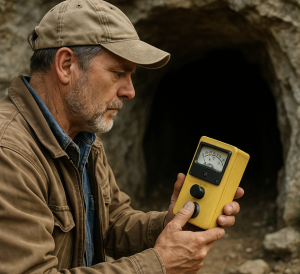
Eli’s land includes a stretch of limestone hills riddled with old caves. Most are small, dusty, and full of bats. But one, Eli claims, is different.
“It’s deeper. Cooler. And when I brought one of my dosimeters in there, the radiation dropped much faster than it should’ve. I mean way faster,” he said, wide-eyed and dead serious.
According to Eli, something about the cave’s structure—its depth, its mineral makeup, maybe even the way the air flows—creates what he calls a “natural nuclear buffer zone.”
He pulls out a notebook that looks like it’s survived three decades of coffee spills and panic attacks. Inside: hand-drawn maps, measurements, and radiation readings logged hour by hour.
“I’m no scientist,” Eli says, “but I know what the meter says. And the meter says this cave eats fallout for breakfast.”
Weeks of Testing… And More Weird Results
For 19 straight days, Eli tested the cave under different conditions:
-
Plastic sheeting covering the entrance
-
Ventilation open vs. sealed
-
Airflow from a battery-powered fan
-
Dust agitation tests
-
Heat and humidity logs
The readings stayed bizarrely low.
“At first I thought the meter was busted,” Eli admitted. “So I used a second one. Then a third. Same result every time.”
The deeper he went, the safer the readings were. Until, at one point, he claims the radiation dropped to practically nothing.
“Zeroed out,” he says. “I’ve never seen that anywhere except inside reinforced concrete.”
“This Changes Everything,” He Says
Eli now believes natural formations like his cave could be the key to rural survival if a nuclear blast hits closer than anyone expects.
“You don’t need a $40,000 bunker,” he says. “You need geography. You need rock. You need depth. Tell the average American they need three feet of concrete and they’ll give up. But tell them they might already live near something nature built for free?”
He taps his chest.
“That gives people hope.”

Neighbors Are Skeptical… But Curious
Some locals think Eli’s gone off the deep end. Others have started showing up with flashlights.
“Had three families come out last week,” he said. “One guy drove an hour. I showed them the readings. After that, they weren’t laughing.”
One neighbor, who asked not to be named, said:
“I never believed in this nuclear stuff. But if Eli’s cave works the way he says, I want to know where the closest one is to my house.”
He Has One Warning
Despite his excitement, Eli waves off the idea that he’s found some magic solution.
“Look, this cave won’t survive a direct hit. Nothing will. But if you’re far enough away from ground zero? This could buy families time. Real time. The kind that keeps you alive.”
He pauses for a moment, staring toward the hills like he expects them to glow any second.
“You prepare for years thinking you’ll need gadgets and gear and tablets and suits. And then nature taps you on the shoulder and says, ‘Relax, I’ve got something too.’”
Is Eli Right?
Maybe. Maybe not.
But whether he’s uncovered a geological fluke or the survival cheat-code no one else has noticed yet, one thing is clear:
Eli Turner just became the most interesting prepper in Wyoming.